
Recovery housing is substance-free shared accommodation with rules, peer support and staff oversight, rather than licensed medical treatment. Sunshine Sober Living operates a recovery residence in Tarzana, roughly ten miles from Studio City, for adults aged 21 and older. Residents work, study and attend outside treatment while living somewhere stable and accountable.
The phrase covers a wide range of houses, and the differences between them matter enormously. Some are peer-run with no staff at all. Some have a live-in manager, written rules and testing. A few are attached to clinical programs. A family calling around Studio City in a hurry can easily assume all three are the same product.
This page sets out the distinctions in plain terms: what a recovery residence provides, what California actually regulates, and what the research says about staying. Anyone wanting the broader service description can read the overview of recovery housing alongside it.
California’s Department of Health Care Services does not license sober living homes, so the practical test is whether counselling or treatment services happen inside the building.
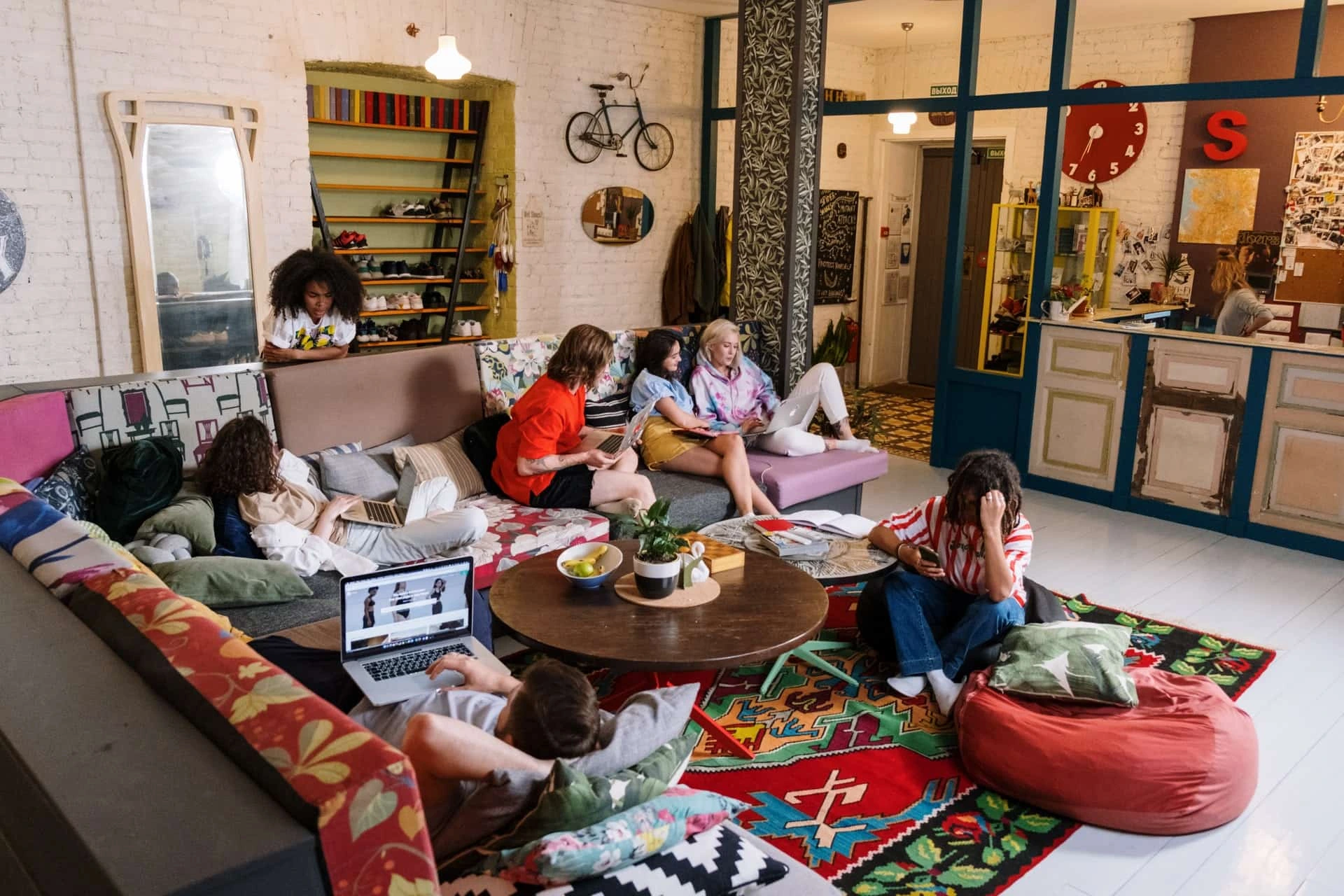
It is housing. Residents sign up to a set of conditions, chiefly that nobody uses alcohol or non-prescribed drugs on or off the property, that testing is random, that curfew holds and that everybody contributes to the running of the home. A house manager is present and Program Director Elliot Leonard oversees the program at Sunshine Sober Living. That is the whole offer, and it is deliberately narrow. Recovery housing in Studio City means the same thing it means anywhere else in California.
What it is not is a detox unit, a rehabilitation hospital, an intensive outpatient program or a psychiatric facility. No clinical services are delivered inside the residence. Residents who need those attend them elsewhere, and admissions arranges referrals to licensed California and Joint Commission-accredited providers. That boundary is not a limitation to apologise for; it is what keeps recovery housing for drug and alcohol use honest about its role.
This is where most families are misinformed. The California Department of Health Care Services states that it does not license, certify or investigate complaints against sober living or transitional living homes. Licensure attaches to services, not to sobriety. A residence that provides twenty-four hour non-medical residential recovery or treatment services to adults must hold a valid DHCS licence, and the triggers include detoxification, individual or group counselling sessions, educational sessions, treatment planning and incidental medical services.
So the honest test is what happens inside the building. A house that runs counselling groups on site needs a licence. A house that provides accommodation, rules and peer support while residents attend licensed residential rehabilitation or outpatient care elsewhere does not. Anyone comparing recovery housing near Studio City should ask any residence directly which of the two it is, and be wary of one that blurs the answer.
The National Alliance for Recovery Residences sorts recovery homes into four levels of support, and the vocabulary is worth borrowing when comparing options. The levels describe staffing and structure rather than quality, and a well-run Level II residence can suit somebody better than a Level III with more staff and less fit. The distinction that matters to most callers is whether anyone is professionally responsible for the house day to day.
The federal guidance says it does. SAMHSA’s 2023 best-practice document for recovery housing sets out ten principles, among them being recovery-centred, using social model principles, refusing patient brokering, and pairing housing with evidence-based outpatient treatment. It cites research in which residents of recovery housing showed substance use rates of 31.3 per cent against 64.8 per cent in a usual-care comparison group. Housing was not the only variable, but the gap is not a rounding error either.
The mechanism is unglamorous. A fixed bed, a known curfew, people who notice absence, and a week with edges. Most returns to use begin with a drift in routine long before the first drink, which is the argument laid out in why people relapse after treatment ends. The same logic explains why an early departure carries risk, a point examined in leaving sober living before the plan is finished.
The neighbourhood’s housing stock explains a lot of it. North of Ventura Boulevard the streets are lined with 1940s and 1950s flats and remodelled ranch homes, and the ground rises south through Fryman Canyon toward Mulholland Drive into steeper, pricier hillside houses. The walkable pocket around Tujunga Avenue is small. This is a neighbourhood of working households with a median age around thirty-eight, close to NBCUniversal and Campo de Cahuenga at the Universal City boundary, and it was not built with shared structured housing in mind.
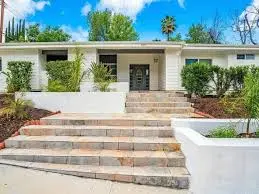
Recovery housing for Studio City residents is therefore usually found further west. The Sunshine residence sits ten miles away in Tarzana, on a quiet street of family homes rather than on a commercial corridor. Residents commute back east for work and meetings. Anyone comparing addresses across the Valley can start with how to search for a sober living home nearby.
Six questions separate a serious residence from an unserious one, and none of them are awkward to ask on a first call. A house that hesitates on any of them is telling you something useful. Take notes during the call, ask the same six questions of every residence on the list, and compare the answers side by side afterwards rather than relying on the impression the friendliest voice left behind.
Worth asking every house on the shortlist:
The National Alliance for Recovery Residences describes four levels of support.
| Level | Support model | What that looks like |
|---|---|---|
| Level I | Peer-run | Democratic house rules, no paid staff, residents self-govern |
| Level II | Monitored | A house manager, written rules, testing and curfew |
| Level III | Supervised | Structured programming with credentialed staff on the team |
| Level IV | Service provider | Clinical services delivered on site by licensed personnel |
Higher is not automatically better; the right level depends on how much support the person needs now.
The house is about 10 miles from Studio City, roughly 16-25 minutes in normal traffic, and longer at peak, since this stretch of US-101 through Sherman Oaks is one of the Valley’s most congestion-prone. The full route, turn by turn, is on the directions page below.
Sunshine Sober LivingNo. The Department of Health Care Services states plainly that it does not license, certify or investigate complaints against sober living or transitional living homes. Licensure applies to residences delivering twenty-four hour non-medical recovery or treatment services, triggered by things like detoxification, counselling sessions or treatment planning. A house offering accommodation, rules and peer support while residents get treatment elsewhere falls outside that requirement.
Staffing and programming. A Level II home is monitored, meaning a house manager, written rules, testing and curfew. A Level III home is supervised, adding structured programming and credentialed staff to the mix. Both are recovery residences rather than treatment facilities. The right choice depends on how much daily support the individual needs, not on which number sounds more impressive on a website.
Not inside the residence. Counselling, psychiatry, medication management and medical treatment all happen with outside licensed providers, and residents attend those appointments while living in the house. Sunshine Sober Living works with licensed California facilities and Joint Commission-accredited programs to arrange referrals for detox, residential rehabilitation and intensive outpatient care when a resident needs a level of support that housing cannot supply.
The terms overlap in everyday speech but they are not identical. Halfway house often describes housing tied to a correctional or court programme with a fixed term. A recovery residence is voluntary, funded privately, and open-ended within reason, with residents free to leave. What both share is a substance-free environment and rules that outlast anyone’s motivation on a difficult week.
Patient brokering means paying or receiving money in exchange for sending a person to a particular treatment provider. SAMHSA’s recovery housing guidance names refusing it as a best practice, because it turns a vulnerable person into a commission. It is a fair question to ask any house or referral service directly. An operator with nothing to hide will answer it without hesitation or offence.
Sunshine Sober Living provides structured recovery housing and transitional living. Medical detoxification, residential clinical treatment and other higher levels of care are provided by appropriately licensed treatment providers, and our admissions team can arrange a referral. Recovery is personal, and no sober living program can guarantee a particular outcome. If you or someone you love needs immediate help, the SAMHSA National Helpline is free and confidential on 1-800-662-4357, 24 hours a day.
Choosing a recovery residence is mostly a matter of asking direct questions and listening to how they are answered. Sunshine Sober Living will describe its rules, its staffing and its referral relationships without a sales pitch, and say when another level of care fits better. Call 866-216-9789 to schedule a confidential assessment, or read what the family behind the house stands for first.