
Sunshine Sober Living is a family-owned structured sober living residence at 5650 Donna Avenue in Tarzana, about six to seven miles east of West Hills. Adults aged 21 and older live in a substance-free, structured house while they keep working, studying and attending twelve-step meetings across the northwest San Fernando Valley.
West Hills sits in the far northwest corner of the San Fernando Valley, where the tract grid runs out against the Simi Hills. The sober living West Hills families end up choosing is usually not inside the neighborhood itself. Sunshine Sober Living is a thirteen to twenty minute drive away, close enough to keep a job and a family, far enough to break an old daily pattern.
The residence has served the recovery community since 2019 and stays family-owned. Richard Goldberg founded it, Wendy Goldberg directs admissions and Elliot Leonard runs the program, and the three of them are the people you actually meet. Residents are men and women aged 21 and older, including people managing co-occurring conditions, who want a sober address while independence gets rebuilt.
The Sherman Way corridor east from West Hills carries both the Learning to Live stag at First United Methodist Church of Canoga Park and the early-morning and noon meetings at Hole in the Sky, which makes one road the spine of a West Hills recovery week.
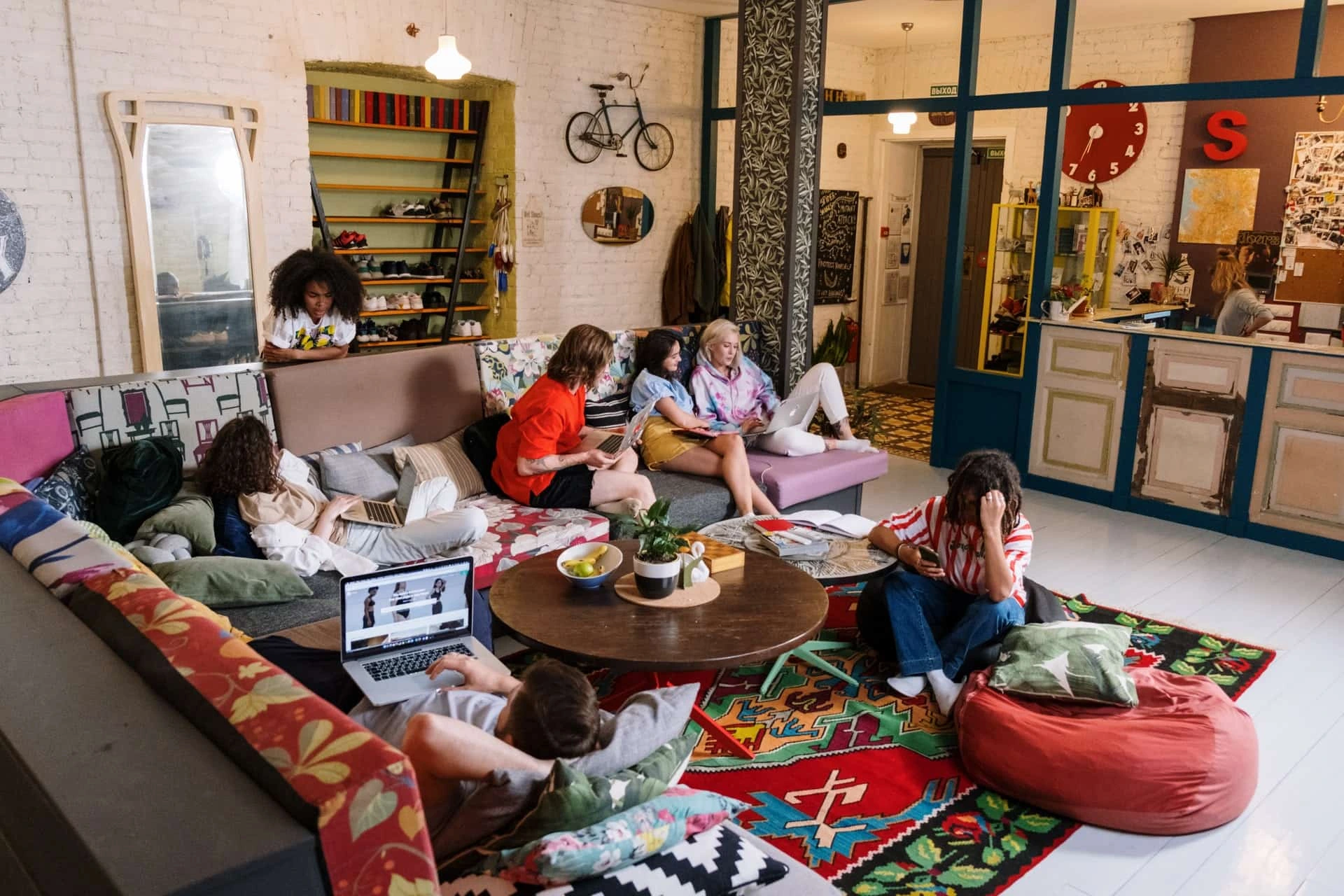
Sober living is housing with structure attached. Nobody is treated here and nobody is admitted as a patient. Residents live together in a substance-free home, keep to a shared routine, hold each other to it, and go out every day to work, school, therapy and meetings. The house is the stable base underneath all of that rather than a replacement for it.
It suits the person who has finished treatment and knows an empty apartment is a risk, and the family that has run out of ways to help without becoming the police. SAMHSA describes recovery as a process of change supported by four dimensions, health, home, purpose and community, which puts housing on the list rather than beside it. Sunshine Sober Living asks for one thing at the door: a real commitment to long-term recovery. The rest, the shape of the day included, is learned inside.
The practical recovery route out of West Hills runs east along Sherman Way. First United Methodist Church of Canoga Park at 22700 Sherman Way carries a men’s stag meeting in its parlour, and Hole in the Sky at 21520 Sherman Way in neighboring Canoga Park is listed by the Los Angeles Central Office for an early-morning spiritual discussion and a noon Big Book study. One road links a West Hills address to a meeting most hours of the working day.
Around those anchors sit the places that make ordinary life possible again: Fallbrook Center on Fallbrook Avenue for a first job back, the Platt Branch Library at 23600 Victory Boulevard for study and paperwork, Shadow Ranch Park for somewhere to walk at seven in the morning. Recovery here is built from small, repeatable trips rather than grand gestures.
Most people arrive with an existing life to protect. A shift at UCLA West Valley Medical Center on Medical Center Drive, a desk in Warner Center, a class at Los Angeles Pierce College or California State University Northridge. None of it has to stop. The house sits north of Burbank Boulevard between Wilbur Avenue and Vanalden Avenue, two blocks from Tarzana Recreation Center, and residents commute out of it every weekday morning.
There is no rail station inside West Hills, but the western end of the Metro G Line is close, with the Canoga, Sherman Way and Roscoe stations all on Canoga Avenue in Canoga Park. Pierce College has its own G Line station. Metro Lines 162 and 163 work the Sherman Way corridor, and Chatsworth is the nearest Metrolink station for anyone whose job sits outside the Valley.
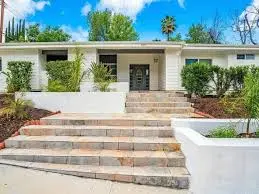
A week has a shape, and the shape is the point. Mornings start at a fixed time, the house is cleaned by the people who live in it, and everyone leaves for something: a job, a class, an outpatient session, a job search that looks like a job. Evenings bring people back for a meal, a house meeting or a meeting somewhere on the Sherman Way corridor.
Repetition is doing more work here than it appears to. Among 245 sober living residents followed for eighteen months, abstinence rose from 17 percent at entry to 49.1 percent at twelve months, and arrests dropped from 41.9 percent to 22 percent. Twelve-step involvement predicted almost every outcome measured, which is why attendance is treated as a commitment rather than a suggestion.
The parts of the week residents notice most:
Sunshine Sober Living is recovery housing. It is not a detox unit, not a residential rehabilitation program, not a hospital and not an intensive outpatient program. The distinction matters when a family is comparing options, because those things do different jobs and usually happen in sequence. Admissions works with licensed California treatment facilities and arranges referrals when a clinical level of care is the right next step.
Someone still physically dependent needs medically supervised withdrawal before anything else can hold. Someone who needs clinical hours in the day needs residential rehabilitation or an outpatient program running alongside the housing. Sunshine sits underneath those services and keeps the other twenty hours of the day steady, which is often what decides whether clinical work survives contact with an ordinary week.
The questions people arrive with split along predictable lines. Men and the people who love them usually want to know about accountability and getting back to work, which is what the men’s page for this area covers. Women more often ask first about safety, privacy and family obligations, and the women’s page answers those without detouring.
If the real question is housing and stability rather than programming, start with how recovery housing works in California, which sets out the licensing rules and the evidence on length of stay. If someone is standing at a discharge date with nowhere structured to go, the transitional living page is the one to read tonight rather than next week.
These are the destinations that usually sit at the other end of the trip.
| Destination | How people get there | Why it matters in recovery |
|---|---|---|
| UCLA West Valley Medical Center, Medical Center Drive | Car, or Metro on the Victory Boulevard and Vanowen Street lines | The largest employer in West Hills and the nearest hospital to it |
| Warner Center, immediately southeast of West Hills | US-101, or the G Line from Canoga Avenue | Office work that can absorb someone returning part-time |
| Los Angeles Pierce College | Its own G Line station | A class schedule gives the week a second fixed point |
| Hole in the Sky, 21520 Sherman Way, Canoga Park | Straight along the Sherman Way corridor | Early-morning and noon meetings on one road |
Keeping one of these trips intact through the first month is worth more than adding three new commitments.
From Sherman Way at Fallbrook Avenue, head east on Sherman Way, south on Tampa Avenue to Burbank Boulevard, east on Burbank Boulevard, then north on Donna Avenue. A freeway alternative runs US-101 east from Valley Circle Boulevard to the Tampa Avenue exit. That is about 6 to 7 miles, roughly 13-20 minutes in normal traffic.
Sunshine Sober LivingNo. The residence is at 5650 Donna Avenue in Tarzana, roughly six to seven miles east, and most people drive it in thirteen to twenty minutes. The sober living West Hills searches turn up sits mostly outside the neighborhood, because the local housing stock produces very few shared rooms and almost no apartments.
Not always. Many residents arrive straight from residential treatment, and that is the smoothest path. Others come from a hospital stay, from a family home where things have stopped working, or from their own decision that living alone is not safe yet. Admissions looks for a real commitment to recovery and a level of need that structured housing can meet.
Sunshine Sober Living serves men and women aged 21 and older, and the program is organized so each has its own setting and peer group. Wendy Goldberg handles that conversation during admissions, because the answer depends on who is in the house at the time. Call and ask directly rather than guess from a page.
Yes, and most do. Employment is treated as part of recovery rather than a distraction from it. Residents commute from Tarzana to Warner Center, to the industrial corridor along Roscoe Boulevard and De Soto Avenue, and to jobs across Los Angeles County. The routine is built around people who leave in the morning and come back at night.
A conversation rather than a sales pitch. Admissions asks what treatment has already happened, what is going on medically and psychiatrically, what the person needs to keep, and what the family can support. Where a clinical level of care is the better next step, a referral is arranged instead. Insurance verification is available through the site, though coverage is never promised.
Sunshine Sober Living is structured sober living. It is not a hospital, a detox unit or a clinical program. Where someone needs medical or clinical care, our admissions team refers to licensed California providers and to Joint Commission-accredited facilities. Outcomes in recovery are individual and cannot be guaranteed. If you or someone you love needs immediate help, the SAMHSA National Helpline is free and confidential on 1-800-662-4357, 24 hours a day.
If someone you love in West Hills is coming to the end of treatment, the next decision is where they sleep on the first ordinary Tuesday. Structured sober living West Hills families can drive to in under twenty minutes starts with one phone call. Ring 866-216-9789 or schedule a confidential assessment with Wendy Goldberg, and ask every hard question you have.