
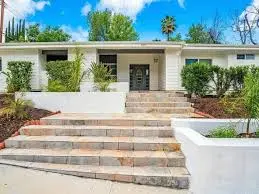
Sunshine Sober Living houses women aged 21 and older at 5650 Donna Avenue in Tarzana, a short drive west of Studio City. The residence is substance-free and structured, with a house manager on site. Women keep their own therapists, outpatient care, jobs and family contact while living somewhere stable and private.
For a lot of women, the hardest question after treatment is not whether to stay sober. It is where the door locks at night, who has the address, and how much of the last two years has to be explained to a stranger before a lease is signed. Those questions come before anything else can start.
The house in Tarzana answers them plainly. A quiet street north of Burbank Boulevard, an adults-only residence with rules that apply to everyone, and staff who do not discuss residents outside the house. What the women’s program offers is stability first, and everything else built on top of it.
The Unitarian Universalist Church of Studio City at 12355 Moorpark Street sits beside the branch library at 12511 Moorpark Street, making one block a practical anchor for a weekly routine.
The federal definition of recovery used by SAMHSA rests on four dimensions: health, home, purpose and community. Home is named explicitly, and it is named second for a reason. A woman sorting out medication, custody arrangements, a job and a sponsor at the same time cannot do any of it from a sofa she may lose on Friday. Housing instability is not a side issue that gets tidied up later. It is the thing that decides whether the rest of the plan survives the month.
Women in this situation often arrive having already run out of good options, a position covered in more detail in having nowhere safe to live after treatment ends. The residence exists to take that particular emergency off the table, so that the harder and slower work of recovery has somewhere steady to happen while it is going on.
Women’s sober living in Studio City raises this question before any other, and the answer starts with discretion. It means the details of a woman’s history stay inside the house. Staff do not confirm to callers who lives there. Visitors are arranged rather than dropped in. Belongings, medication and personal information are handled with a boundary around them, and residents are expected to extend the same discretion to one another, which is a house rule rather than a suggestion.
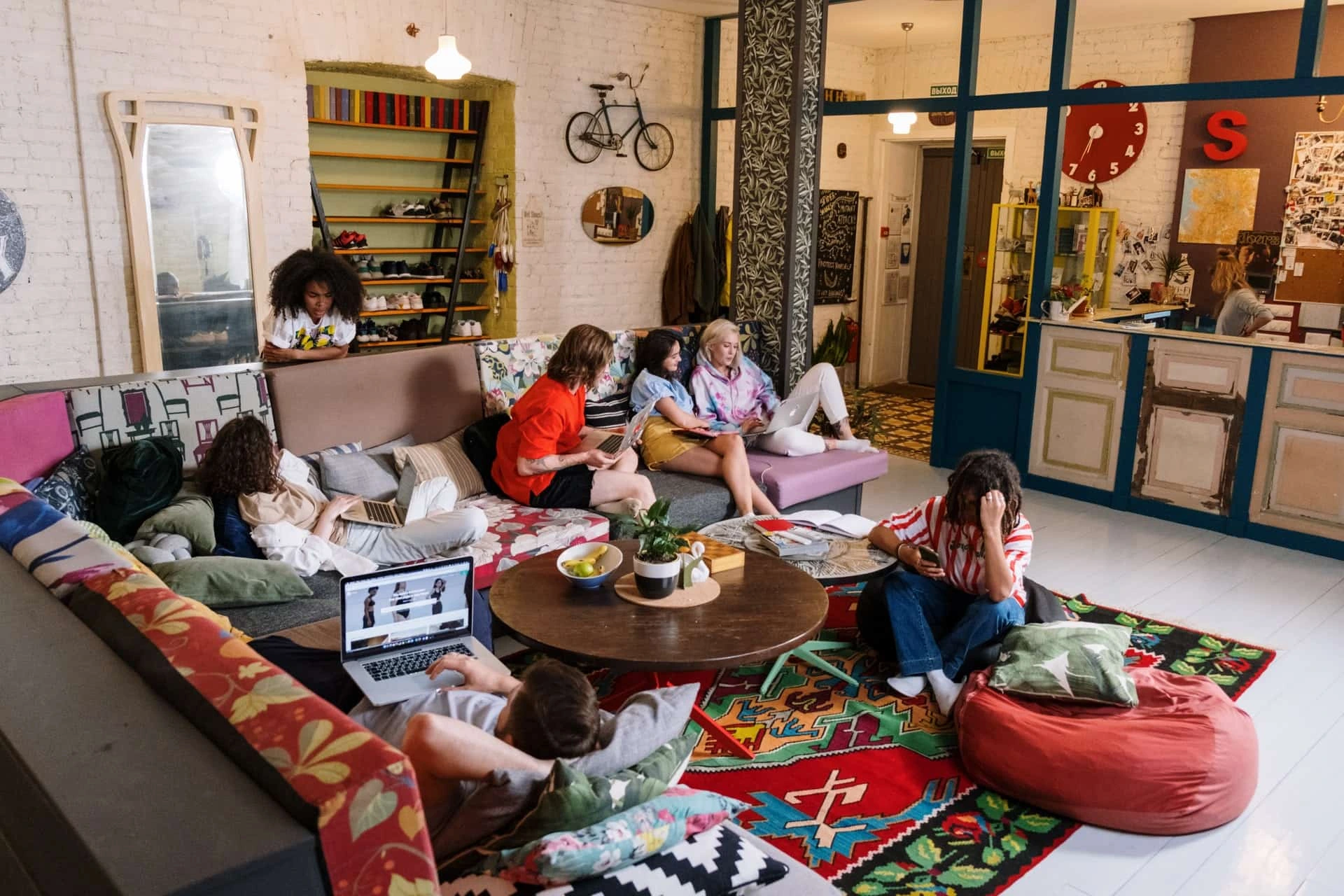
Communal living is still communal, and pretending otherwise would be dishonest. Bathrooms get shared, chores are assigned, and someone will notice a hard night. The trade is real: less solitude in exchange for far less exposure than an unstable rental or a return to a household where using was normal. Photographs of the rooms and common spaces are on the house gallery for anyone who wants to see it before calling.
The Unitarian Universalist Church of Studio City at 12355 Moorpark Street is listed by the Los Angeles Central Office as an AA meeting location, and it sits a few doors from the Studio City Branch Library at 12511 Moorpark Street. The Thirty-Sixth Church of Christ, Scientist at 4032 Whitsett Avenue carries the As Bill Sees It and At Our Whitsett’s End meetings. The Beeman Park meeting runs at the Studio City Recreation Center on Rye Street.
Which of those rooms is a women’s meeting on a given night is worth confirming against the current Central Office schedule rather than assuming. Women’s sober living near Studio City tends to be built around one or two dependable rooms. Many women prefer a women’s meeting for the first months and widen out later, particularly if the drinking or using was tangled up with a relationship. The unsteady weeks right after discharge, described in what the period after treatment can feel like, are exactly when a familiar room matters most.
The residence is for adults aged 21 and older, so parenting happens through visits, phone calls and school runs arranged around the house schedule rather than under its roof. Mothers with children still at Walter Reed Middle School or nearby in the Coldwater Canyon corridor build a week around pickup times, custody agreements and court dates, and the house manager plans with them instead of around them.
That arrangement asks something of the family too. Grandparents often carry more than they expected for a season. Being twenty minutes west of Studio City is workable for a Tuesday afternoon visit and honest about not being next door. Rebuilding a relationship with a child is slow, and it is one of the clearest things a rebuilt life after treatment is actually made of.
Many residents live with a co-occurring condition, and the house is open to women in that position. Women’s sober living in Studio City is often sought for exactly that combination. The residence is not a clinical setting and does not pretend to treat anything. What it does is keep the conditions steady enough for treatment to work: sleep, meals, a predictable evening, and no substances in the building. Women continue with their own therapist or psychiatrist, and prescribed medication is disclosed at intake and handled under house policy.
Where more care is needed, admissions refers to licensed California providers and Joint Commission-accredited facilities for detox, residential rehabilitation or structured outpatient treatment. Providence Cedars-Sinai Tarzana Medical Center is minutes from the house for anything medical, and there is no hospital inside Studio City itself, which is worth knowing either way. Insurance coverage can be checked in advance through the insurance verification form.
It appears to. A 2023 study followed 455 sober living residents and found that those who stayed at least six months had significantly more days abstinent, fewer psychiatric and depression symptoms, and lower odds of an ongoing substance use disorder or fresh legal trouble than the women and men who left earlier. Six months sounds long in week three and short in month eight.
That evidence is worth holding on to when a lease turns up early or a partner starts pressing for a return home. A six-month commitment made at intake, in writing, is far easier to keep than a six-month intention. Women weighing up nearby options sometimes also look at the Sherman Oaks women’s page, which covers the eastern side of the Valley.
Most women leaving treatment are choosing between four realistic options.
| Where she lands | What it gives her | What it leaves to chance |
|---|---|---|
| Back in the family home | Familiar faces, no rent, immediate access to children | Old roles, old arguments, whatever is in the cupboard |
| A room rented from a stranger | Independence and a lease in her own name | No accountability, no one who notices a bad week |
| A friend’s spare couch | A short-term roof and some goodwill | No stability past next month, no privacy at all |
| Structured sober living | Rules, testing, curfew, staff and sober housemates | Communal living and a commute to work or school |
The right answer depends on the household she would be returning to.
The house is about 10 miles from Studio City, roughly 16-25 minutes in normal traffic, and longer at peak, since this stretch of US-101 through Sherman Oaks is one of the Valley’s most congestion-prone. The full route, turn by turn, is on the directions page below.
Sunshine Sober LivingStaff do not confirm to outside callers that a particular woman lives at the residence, and personal history stays inside the house. Visitors are arranged in advance rather than arriving unannounced. Residents agree to the same discretion toward each other as a condition of living there. Communal areas are shared, so complete solitude is not on offer, but exposure is far lower than in most alternative housing.
Yes, and she is encouraged to. Sunshine Sober Living is recovery housing rather than a treatment provider, so outside clinical relationships continue exactly as they were. Appointments are built into the weekly schedule alongside work and meetings. Prescribed medication is disclosed at intake and stored under house policy. Where a resident has no current provider, admissions can point toward licensed options in the Valley.
The residence houses adults aged 21 and older, so children do not stay overnight. Visits happen off site and are planned around custody agreements, school hours and the house schedule. Mothers coordinate with the house manager rather than improvising, which tends to make visits calmer and more reliable. For many residents, steady contact rebuilt slowly is a more realistic goal for the first months than full custody.
Often, yes. Residents with co-occurring conditions are welcome, and many are managing anxiety, depression or trauma alongside substance use. The house supplies routine, safety and a substance-free environment rather than clinical treatment. The therapeutic work continues with licensed professionals outside the residence. If somebody needs a higher level of care than housing plus outpatient support, admissions says so directly and helps arrange it.
Yes. Admissions regularly coordinates with treatment facilities elsewhere in California and out of state, taking discharge information, medication lists and timelines directly from the clinical team. Travel and arrival timing get planned together so nobody lands in Los Angeles with hours to fill and nowhere to go. Wendy Goldberg handles those conversations and will say plainly if the fit is wrong.
Sunshine Sober Living is structured sober living. It is not a hospital, a detox unit or a clinical program. Where someone needs medical or clinical care, our admissions team refers to licensed California providers and to Joint Commission-accredited facilities. Outcomes in recovery are individual and cannot be guaranteed. If you or someone you love needs immediate help, the SAMHSA National Helpline is free and confidential on 1-800-662-4357, 24 hours a day.
There is no obligation attached to a phone call. Describe the situation, ask what a week in the house would look like, and hear an honest answer about whether this is the right place. Sunshine Sober Living can be reached at 866-216-9789 to schedule a confidential assessment, or through the admissions office if writing is easier than talking today.