
Men’s sober living at Sunshine Sober Living means structured recovery housing for men aged twenty-one and older at 5650 Donna Avenue in Tarzana, a short drive east of Canoga Park. Residents keep working, attend meetings and outpatient care elsewhere, and answer to a shared house schedule while they rebuild independence.
Most men who call from Canoga Park are not asking about amenities. They want to know whether the job survives and whether the people around them will be straight with them. This is a dense working district of apartment blocks along Vanowen Street and Roscoe Boulevard, and men leaving treatment here need to be earning within weeks. Men’s sober living in Canoga Park has to be built around a paycheck.
Sunshine Sober Living is family-owned and has served the recovery community since 2019. The men’s side runs on peer accountability rather than supervision for its own sake. For a household weighing two people at once, the women’s program has its own considerations, and the wider overview for this district sits above both pages.
The Frank Kelly Memorial men’s meeting at St. Martin in-the-Fields, 7136 Winnetka Avenue, gives men from Canoga Park a stag room a few minutes east of the district.
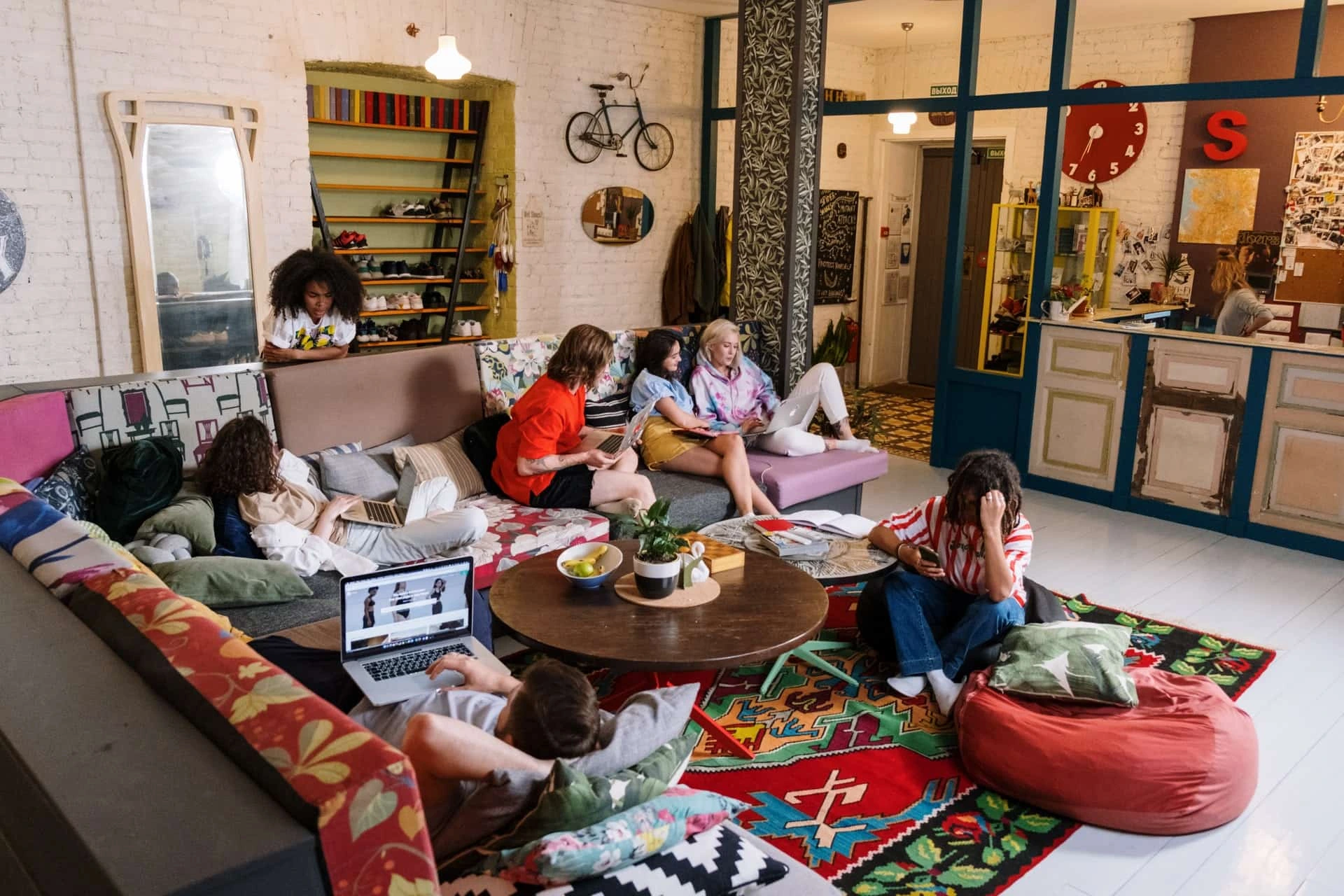
Men aged twenty-one and older who are committed to long-term recovery, including men managing co-occurring conditions. Some arrive the week they discharge from residential care. Some have half a year sober and a living situation that is quietly undoing it: a roommate who drinks, a parent’s garage, a motel paid for by the week. The common thread is a man who has already decided and needs somewhere the decision can hold. The men’s program in general terms covers what applies at any address.
Men who cannot yet be alone with themselves do better here than in a studio apartment. Isolation after treatment is a risk in its own right and it does not announce itself. Living alone after rehab works through why the quiet weeks are the dangerous ones, and admissions will say plainly when a man would be better served by a higher level of care than housing can offer.
Men’s sober living in Canoga Park asks three things of a new resident in the first month: show up, tell the truth, and go to work. In practice that means being out the door on a schedule, testing without an argument, sitting through a house meeting on a night you would rather not, and getting to a room most evenings. Nobody is asked to perform enthusiasm. They are asked to be where they said they would be.
NIDA associates better outcomes with support lasting longer than ninety days, and notes that men with severe substance problems or co-occurring disorders typically need a minimum of three months. Thirty days is an entry point, not a finish line. Men who plan for a season rather than a month tend to leave with a job, a sponsor and a next address already lined up. How the daily structure is built sets out what that season involves.
AA directories list the Frank Kelly Memorial men’s meeting at St. Martin in-the-Fields Episcopal Church, 7136 Winnetka Avenue, just east of the district in Winnetka. Cabrito House at 7552 Remmet Avenue carries the Saturday Night Live meeting and appears in the listings of both the San Fernando Valley AA Central Office and the Los Angeles Central Office. Between the two, a man has a stag room and a mixed room he can reach without a long journey.
Getting to a meeting is not treated as optional at the house, and neither is the ride home from one. Residents travel together where the schedules line up. Program director Elliot Leonard brings professional addiction-treatment experience, including previous work at Jaywalker Lodge, and the expectation he sets is simple: find a home group early instead of sampling rooms for a year. More about the program director sits on his own page.
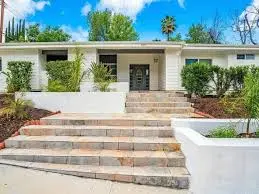
Warner Center is immediately south of Canoga Park and is the largest office district in the Valley. North and east, the industrial belt along Canoga Avenue, De Soto Avenue and Roscoe Boulevard is a legacy of Rocketdyne, Hughes Aircraft and Rockwell, and it still carries trades, warehousing and light manufacturing. For a man going back to physical work or a shift rota, those are the addresses that matter, and all of them stay reachable from the house.
The Canoga G Line station near Victory Boulevard has a 258-space park-and-ride, which matters for a man with a car and a license problem, or a carpool that only covers half the week. Metro Line 244 runs De Soto Avenue and Line 162 runs Sherman Way. The route between the two neighborhoods is short enough that a daily commute back into Canoga Park stays realistic.
It looks unglamorous. A man signs out for a late shift and signs back in. He tests when asked. He has a chore that other people notice if he skips. He sits through a house meeting where somebody raises the thing he was hoping nobody had seen. None of this is punishment. It is the ordinary maintenance of a shared home where the stakes happen to be higher than usual.
The things that actually get checked:
NIDA puts relapse rates for substance use disorders at forty to sixty percent, comparable to the fifty to seventy percent seen in hypertension and asthma, and frames relapse as a signal that care needs to resume or change rather than as a moral failure. The house takes the same view while still holding the line, because a substance-free residence has to stay substance-free for every other man living in it.
In practice that means an honest conversation, a referral to the right level of care, and a door that is not permanently closed. Admissions works with licensed California facilities and Joint Commission-accredited providers and can arrange a return to residential treatment or a step into structured outpatient care where that is what the situation actually calls for.
The two options differ less in monthly cost than in what happens on a bad night.
| Situation | Own apartment in Canoga Park | Men’s house at Sunshine |
|---|---|---|
| A craving at eleven at night | Nobody else knows it happened | Someone is awake in the kitchen |
| Three missed days of work | An employer notices, eventually | Housemates notice the first morning |
| A thin first paycheck | Rent, deposit and utilities all land at once | One predictable housing cost |
| Finding a sponsor | Depends entirely on personal drive | Housemates have one and take you along |
Neither column is a treatment plan on its own, and having nowhere safe to go after treatment is a problem worth solving before discharge day rather than after it.
The house is about 5.5 miles by surface streets, about 7 miles via US-101 from Canoga Park, roughly 15-22 minutes on surface streets, 13-20 minutes via the freeway. The full route, turn by turn, is on the directions page below.
Sunshine Sober LivingSunshine Sober Living serves men and women aged twenty-one and older, and admissions explains the current living arrangements directly rather than through a generality on a web page. What stays constant is the standard: a substance-free residence, house rules that apply to everybody, and expectations about work, testing, curfew and meetings that do not shift depending on who is asking.
Yes, and it is expected of him. Residents work, study or job-hunt during the day, and the curfew carries a sign-out for shifts that finish late. Men commuting toward Warner Center, the Canoga Avenue trades or a jobsite further east manage it by car, by carpool or on Metro. Employment is one of the things the house is designed to protect rather than interrupt.
Plan in months rather than weeks. Ninety days is the floor the research points to, and men who stay through a full season usually leave with the practical pieces in place: steady work, a sponsor, a home group and somewhere to move into. Leaving at thirty days because the immediate crisis has passed is the most common avoidable mistake in early recovery.
A man arrives with his belongings, goes through the house agreement line by line, hands over anything that has no place in a substance-free home, and is given a room, a chore and a curfew time. Somebody walks him to a meeting that same week. The first day is administrative and unremarkable on purpose, because the point is to start a routine rather than mark an occasion.
Residents stay connected to family, work, school and outpatient care, and that connection is part of the point of recovery housing rather than an exception to it. Visiting arrangements are worked out with the program director so they fit around the house schedule. Parents and partners can also call admissions directly on 866-216-9789 with questions before anyone commits to anything.
Sunshine Sober Living is structured sober living. It is not a hospital, a detox unit or a clinical program. Where someone needs medical or clinical care, our admissions team refers to licensed California providers and to Joint Commission-accredited facilities. Outcomes in recovery are individual and cannot be guaranteed. If you or someone you love needs immediate help, the SAMHSA National Helpline is free and confidential on 1-800-662-4357, 24 hours a day.
Canoga Park is close enough that a man can move into structured housing without losing his job, his meetings or the people who keep him honest. Call 866-216-9789 to schedule a confidential assessment, or read what sets this house apart from the next one first. Wendy Goldberg answers admissions calls herself, and a first conversation costs nothing and commits nobody.